

UPI, ONDC & the New Retail Railroads: How Infrastructure Is Rewiring Indian Commerce
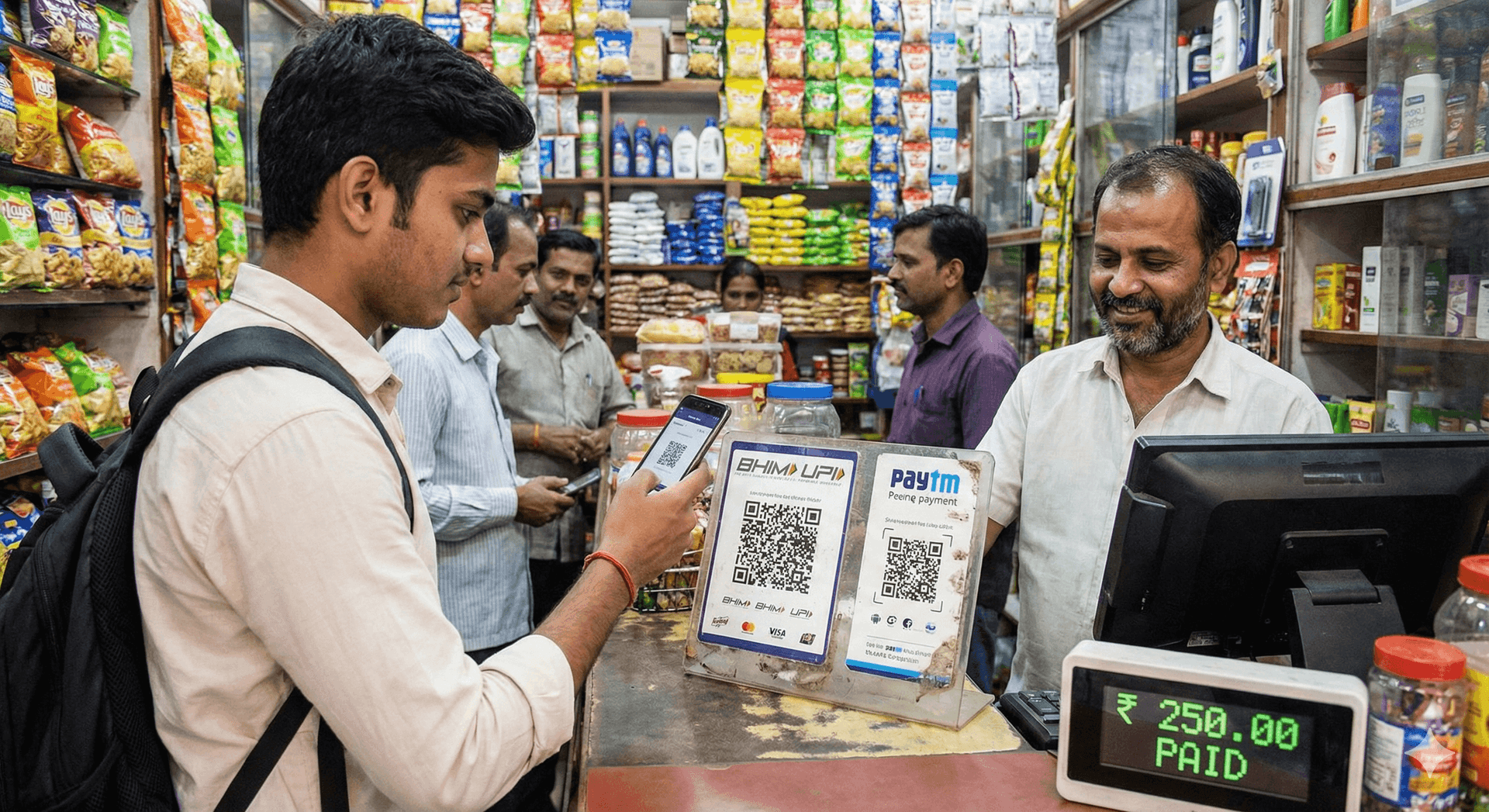
India is building one of the world’s most powerful commerce infrastructures - a layered stack of rails that includes UPI for instant payments, ONDC for open digital commerce, FASTag for mobility, Account Aggregator for data exchange, and private-sector logistics networks built on top. For retailers, these rails are doing what highways, ports, and airports did for previous decades: they reduce friction, expand market reach, and compress the cost of growth.
Three shifts define the current moment:
-
Payments are now instant, zero-cost, and universal. UPI processed over 12.2 billion transactions in November 2023 and crossed 15 billion transactions in May 2024 (NPCI) - unprecedented globally. UPI has become the default tender type across small and large retail.
-
Discovery and selling are decoupling. ONDC is enabling a new model where retailers can sell across any buyer app without building walled-garden storefronts. As of 2024, ONDC reported over 600,000 sellers onboarded, majority being small merchants (ONDC official reports).
-
Commerce flow is becoming interoperable. From payments to cataloguing to delivery, India is building an architecture where any retailer can plug in and scale without proportionate investments.
Together, these shifts reshape how Indian retail will grow, who will win, and where margins will consolidate.
1. The New Retail Railroads: A Structural Shift
India’s infrastructure transformation is digital-first. Unlike the West, where retail infrastructure evolved around physical stores and card networks, India’s system is being built bottom-up around mobile, UPI, and open protocols.
UPI: India’s Financial Highway
- Monthly value processed: ₹20–27 lakh crore across multiple 2024–25 months.
- Zero MDR on P2P and P2M means micro-transactions are viable for small merchants.
- Penetration: 300+ million active users, 50+ million merchants .

UPI reduces friction at checkout, accelerates cash cycles, and unlocks new transaction behaviors - from impulse purchases to subscription models.
ONDC: The Open Commerce Layer
ONDC’s “unbundled marketplace” enables buyers, sellers, and logistics to transact independently via open APIs. Key metrics (2024):
- 600k+ sellers, majority MSMEs (ONDC Quarterly Update)
- 30+ buyer apps live
- Average order values in early categories stabilizing as logistics partners mature
ONDC acts as a “protocol” rather than a platform - the equivalent of moving from private highways to a public grid.
2. What Is Driving Retail Adoption
(A) Cost Compression Creates Margin Space
With UPI removing MDR fees and providing instant settlement, retailers save on:
- card fees
- payment gateway charges
- settlement delays
- cash-handling risk
For high-frequency, low-ticket retail - kirana, pharmacy, QSR - this cost compression directly improves unit economics.
(B) Open Rails Reduce Platform Dependence
Marketplace commissions of 15–35% (industry averages across categories) have traditionally limited margins for emerging brands. ONDC allows retailers to “rent the rails” instead of “rent the storefront,” enabling:
- Direct reach across apps
- Control over pricing
- Better visibility into inventory and customer data
- Lower commission structures vs major marketplaces
(C) Interoperable Logistics Make Fulfilment Cheaper
Logistics APIs within ONDC allow sellers to choose delivery partners based on:
- price
- SLA
- distance
- service quality
This creates price competition within logistics - reducing the cost of last-mile delivery, a major expense in India retail.
3. The Retail Impact: What Changes for Leaders
1. Payments Become a Strategic Lever
UPI unlocks:
- Faster inventory turns
- Better cash-flow cycles
- Reduction in working-capital burden
- Unified view of consumer purchase behavior
For retailers processing millions of monthly transactions, UPI becomes a data asset, not just a payment tool.
2. Discovery Becomes Decentralized
With ONDC:
- Any app can be a storefront
- Merchants gain multi-channel visibility
- Consumers see more competitive pricing
- Retailers with strong supply chains win over those simply buying traffic
This weakens the dominance of large marketplaces and rewards operational excellence.
3. Local Retailers Become National Sellers
A kirana store in Bhopal can now be discovered by a buyer app in Bangalore. ONDC simplifies cross-region discovery, making:
- hyperlocal fulfilment
- regional catalogues
- multi-city expansion
much easier and cheaper.
4. New Business Models Emerge
The rails create opportunities such as:
- “Pay at Shelf” or “Walk-out Pay” using UPI
- Multi-app presence without managing multiple storefronts
- Dynamic pricing based on logistics partner competition
- Subscription commerce with automatic UPI AutoPay
- Hyperlocal marketplaces with decentralized seller pools
4. What Retailers Must Do Now (Action Framework)
1. Make UPI the Default Rail
- Integrate both UPI QR and deep-link/intent flows
- Enable UPI AutoPay for recurring baskets
- Add UPI ID-based loyalty mapping to connect transactions to customers
- Automate refunds via UPI for faster returns processing
2. Pilot ONDC With Focused SKU Clusters
Start with:
- high-velocity, low-return SKUs (FMCG, Pet Food, Household Essentials)
- simple fulfilment journeys
- markets with excess demand or inventory imbalance
Measure:
- cost to serve
- delivery SLA improvements
- per-unit fulfilment cost
- price competitiveness
3. Re-architect the Supply Chain to Be ONDC-ready
- Build catalogues that are API-ready
- Standardize product attributes
- Use multi-partner logistics to reduce per-delivery cost
- Enable store-level fulfilment to serve nearby ONDC orders
4. Use Payments + Commerce Data as a Growth Engine
Combine UPI transaction data + ONDC order data to:
- build demand curves
- optimize pricing
- run micro-campaigns by PIN code
- estimate inventory stockouts before they happen
5. Strengthen Reconciliation and Compliance
With high UPI volume and multi-partner fulfilment via ONDC:
- automated reconciliation
- fraud checks
- return-to-origin (RTO) controls
become essential for margin protection.
5. What’s Next: The 18–36 Month Horizon
1. UPI Credit Lines and Embedded Lending
UPI-linked small credit lines will create new checkout behaviors and larger basket sizes.
2. ONDC Category Expansion
Electronics, beauty, pharmacy, home goods will scale as logistics SLAs improve.
3. Regional Commerce Ecosystems
ONDC will accelerate “regional dominance” brands (e.g., South-India snacks, North-India apparel) into national visibility.
4. Convergence With Account Aggregator
AA-enabled data exchange + UPI payments + ONDC discovery = a powerful flywheel for retailer financing.
References: NPCIONDCPress Information BureauRBI